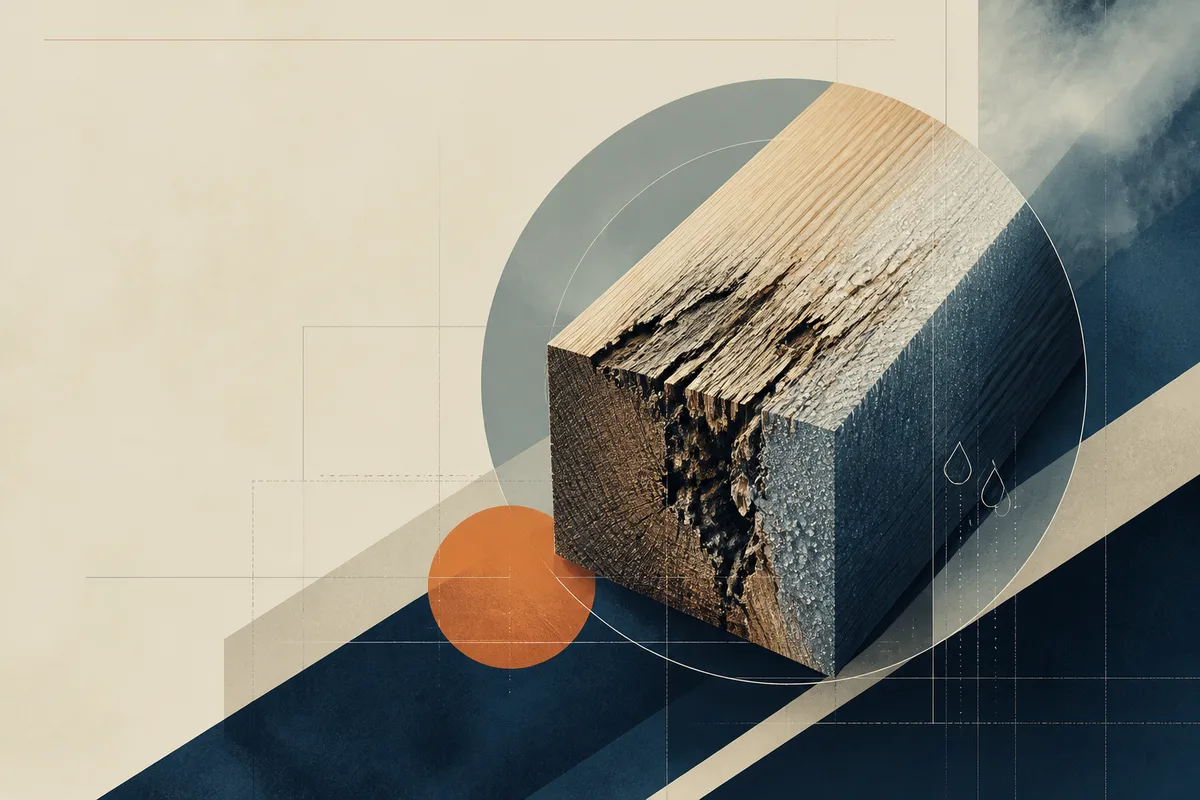
The Mechanics of Wood Failure in High-Humidity Environments
Most deck failures in the Southeast are not caused by the sun alone, but by a fundamental misunderstanding of how wood moves. In Nashville, where humidity levels can fluctuate significantly throughout the day, wooden boards behave like sponges, expanding as they absorb moisture and shrinking as they dry. When a homeowner applies a solid, film-forming stain, they are essentially wrapping their deck in a layer of plastic that cannot stretch at the same rate as the underlying timber.
This article breaks down the technical reasons why film-forming finishes fail in humid climates and why penetrating oils are the standard for professional-grade deck restoration. For property owners in Middle Tennessee looking to move away from the cycle of scraping and peeling, understanding these mechanics is the first step toward a lower-maintenance outdoor space.
Why Film-Forming Stains Fail in the Southeast
When a solid stain is applied, it creates a non-porous layer on top of the wood. In a laboratory environment, this looks like a perfect seal, but in a backyard, it creates a trap for hydraulic pressure.
- High humidity drives moisture into the wood from the unprotected undersides and ends of the boards.
- As the sun heats the deck surface, the trapped water turns into vapor and expands, pushing against the bottom of the solid stain film.
- The resulting tension causes the bond to fail, leading to the characteristic wood stain peeling causes that ruin the appearance of the boards.
- Once the film is breached, water pools in the cracks, accelerating rot because the moisture cannot evaporate through the "plastic" shell.
The Playbook for Selecting Long-Term Finishes
1Prioritize Internal Saturation
A penetrating oil vs solid deck stain comparison begins with where the product lives. A high-quality oil dives deep into the wood cells, protecting the wood from within and preventing cracking. Because the protection is inside the wood, there is no surface film to crack or flake off when the board expands.
2Verify Vapor Permeability
The primary benefit of breathable wood finishes is their ability to let moisture escape. Penetrating oil stains allow wood to breathe so that water absorbed during a summer thunderstorm can evaporate during the following afternoon heat without blistering the finish.
3Evaluate the Maintenance Path
Solid stains require the wood to be stripped back to a raw state once peeling begins, a process that is both labor-intensive and abrasive to the wood fibers. Conversely, semi-transparent oil based stains offer excellent durability and easy maintenance. To refresh a deck, a professional generally only needs to perform a deep cleaning and apply a maintenance coat.
4Match Pigmentation to UV Exposure
While clear oils provide the most natural look, they offer the least protection against graying. A semi-transparent oil strikes a better balance by offering both color and protection. This balance provides the best aesthetic result for cedar or pressure-treated pine decks commonly found in areas like East Nashville.
The Science of Trapped Moisture
The failure of solid stains is rooted in a process called hydrostatic pressure. In the Nashville basin, the ground under a deck is often damp, and that moisture rises into the bottom of the deck boards. Because the top of the board is sealed with a solid "cap," the moisture becomes stuck in the top 1/8th inch of the wood. When the sun hits the deck, the moisture tries to turn into a gas and exit through the top, resulting in bubbles and eventually flaking.
Penetrating oils solve this by never creating a cap. The oil surrounds the wood fibers to repel liquid water, but it remains porous enough to allow water vapor to pass through. This equilibrium prevents the internal pressure that leads to preventing deck stain flaking. Even as the wood moves through seasonal changes, the oil allows the wood to move with temperature changes, maintaining a consistent appearance without the risk of delamination.
How Deck Restoration Nashville helps
Professional deck refinishing typically begins with a thorough assessment of the wood's current moisture content and the removal of any failing previous finishes. For homeowners planning a project, it is helpful to know if the deck has been previously treated with an oil or water-based product, as this dictates the preparation required. A standard scope of work should include specialized cleaning to open the wood pores, followed by the application of a penetrating finish that matches the specific wood species. If you are considering a complete replacement of an old structure, note that Nashville codes require a permit for constructing a new deck. For technical advice or to schedule an onsite evaluation, homeowners can call (615) 537-0490 or visit the company website.
Frequently asked questions
Can I apply penetrating oil over an old solid stain?
No, penetrating oil must reach the raw wood fibers to work effectively. If a solid stain is currently present, it must be completely stripped or sanded off to expose the bare wood; otherwise, the oil will simply sit on top of the old film and fail to dry, creating a sticky mess.
How often does a penetrating oil stain need to be reapplied?
Maintenance intervals depend on sun exposure and foot traffic. Horizontal surfaces like floorboards typically require more frequent attention than vertical surfaces like railings because they are subjected to higher levels of standing water and direct wear. Regular inspections help determine when a simple clean and maintenance coat is necessary to maintain protection.
Why is my deck stain peeling even though I bought a high-quality product?
Peeling is almost always a result of a film-forming product being used on a surface that has too much internal moisture. Even the most expensive solid stains will peel if the wood cannot breathe. Switching to a penetrating oil is the primary way to stop the peeling cycle permanently.
Does oil-based stain take longer to dry in high humidity?
Yes, high humidity can extend the curing time of oil-based products. However, one advantage is that oils can be applied in much lower temperatures than water-based stains, providing more flexibility for scheduling applications during cooler seasons.
Are penetrating oils safe for older, weathered decks?
Older decks often benefit the most from penetrating oils because the wood is typically more porous. The oil helps to condition the aging wood fibers, reducing the rate of checking (splitting) and providing a much-needed barrier against heavy rainfall.
What happens when you get in touch: you describe the situation, we ask the few questions that actually change the answer, and you get a clear scope and next step — no obligation.